

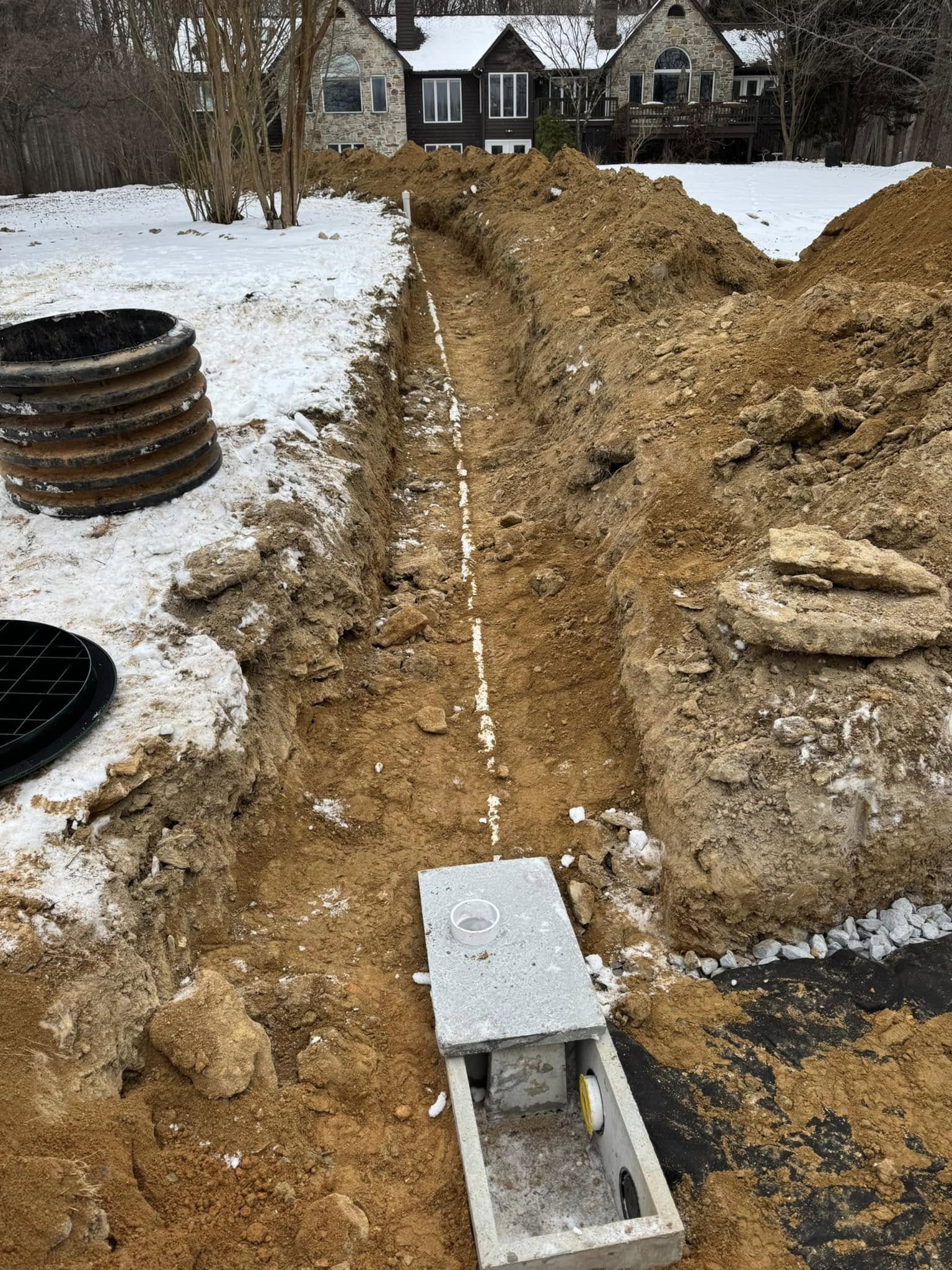
Preparing for Winter: Preventing Frozen or Cracked Septic Lines
As winter rolls in across Maryland, your home’s plumbing system faces extra strain—especially the underground lines that tie into your septic system. At Colson’s Septic Services, with over 30 years of experience serving Carroll, Howard, Frederick, Baltimore & Montgomery counties, we’ve seen firsthand how winter conditions can lead to frozen or cracked septic lines if homeowners aren’t proactive.
Here’s a comprehensive guide to help you prepare your septic lines for winter, preventing frozen or cracked septic lines, avoiding costly repairs, and maintaining peace of mind through the cold months.
Why winter is risky for septic lines
Even though septic tanks are typically buried and insulated by the earth, the lines that carry wastewater from your home to the tank — and from the tank to the drain field — can still be vulnerable. Cold weather introduces two key risks:
- Freezing – When wastewater flow slows (for example, if holiday guests are fewer than expected or you’re away for a few days), the water in the lines can freeze. Ice blocks flow and cause backups or forced breaks in the line.
- Cracking / Damage – The freeze-thaw cycle exerts pressure on underground pipes. If a line is already weakened by tree roots, corrosion, or settlement, a crack can open up under freezing conditions, leading to leaks, soil saturation, and system failure.
Because Colson’s keeps up with proper septic installations, repairs, and maintenance, we know that prevention is far less expensive (and stressful) than fixing a broken or frozen line in mid-winter.
Your winter prep checklist
Here are the key actions to take before the snow flies and temperatures drop:
- Schedule a system inspection
If you haven’t had your tank pumped or lines inspected in the past 12 months, book a visit with us. We’ll check for weak points in the system, ensure proper baffle and filter function, and inspect the length of line for signs of damage or low-flow areas.
- Pump your tank if due
As noted on our site, pumping every 3-5 years (depending on household size and tank volume) helps maintain flow and avoid backups. Dirty or overloaded tanks slow down drainage, increasing the chance of lines freezing.
- Keep lines flowing
Encourage regular water use throughout winter days so wastewater keeps moving through the system. If you’re going on a long trip, ask a neighbor to run a sink or flush a toilet every couple of days to maintain flow.
- Insulate or protect exposed piping
If any portion of your sewer line runs shallow or above grade (such as from a basement or crawl space to the septic tank), consider adding insulation or protective board wrap. Even a tubular insulation sleeve helps slow the dropping temperature.
- Ensure proper grading and cover
Check that the soil above the septic lines is properly graded and has adequate cover (at least 12–18 inches typical). Areas of bare ground or erosion can allow frost to penetrate deeper and freeze the line. If you see bare spots or erosion channels, now’s the time to fill and level.
- Avoid heavy equipment or weight above lines
Winter can mean plows, heavy vehicles, or even stacked firewood near septic drain-fields or lines—not advisable. Excess load can compress the soil, crack pipes, or shift lines, making them more vulnerable to freezing or rupture.
- Monitor for subtle warning signs
Before a full freeze, you may notice slower drainage, gurgling toilets, or puddles above the drain field. These are early signals of trouble and deserve a call. Addressing them before hard freeze is far cheaper than emergency repairs when it’s freezing outside.
What we at Colson’s can do for you
At Colson’s Septic Services, we offer:
- Comprehensive winter-readiness inspections of tanks and lines
- Pumping and cleaning of septic tanks to restore proper flow
- Repair or replacement of damaged or shallow lines that are at risk of freezing
- Professional advice on insulation, grading, and load avoidance above septic infrastructure
We’re located at 1834 West Liberty Road, Westminster, MD 21157, and serve Carroll, Howard, Frederick, Baltimore & Montgomery counties.
In summary
Winter weather introduces real risks for septic systems—frozen lines, cracked pipes, backups, and costly emergencies. But with a little preparation and the right partner, you can keep your system flowing smoothly, safeguard your home, and have confidence throughout the cold months.
If you’d like a winter-readiness inspection or are concerned about your lines, give us a call at 443-536-9382 or visit our website to schedule your service.
Stay warm—and let us help you with Preventing Frozen or Cracked Septic Lines and keep your septic system winter-proof.