

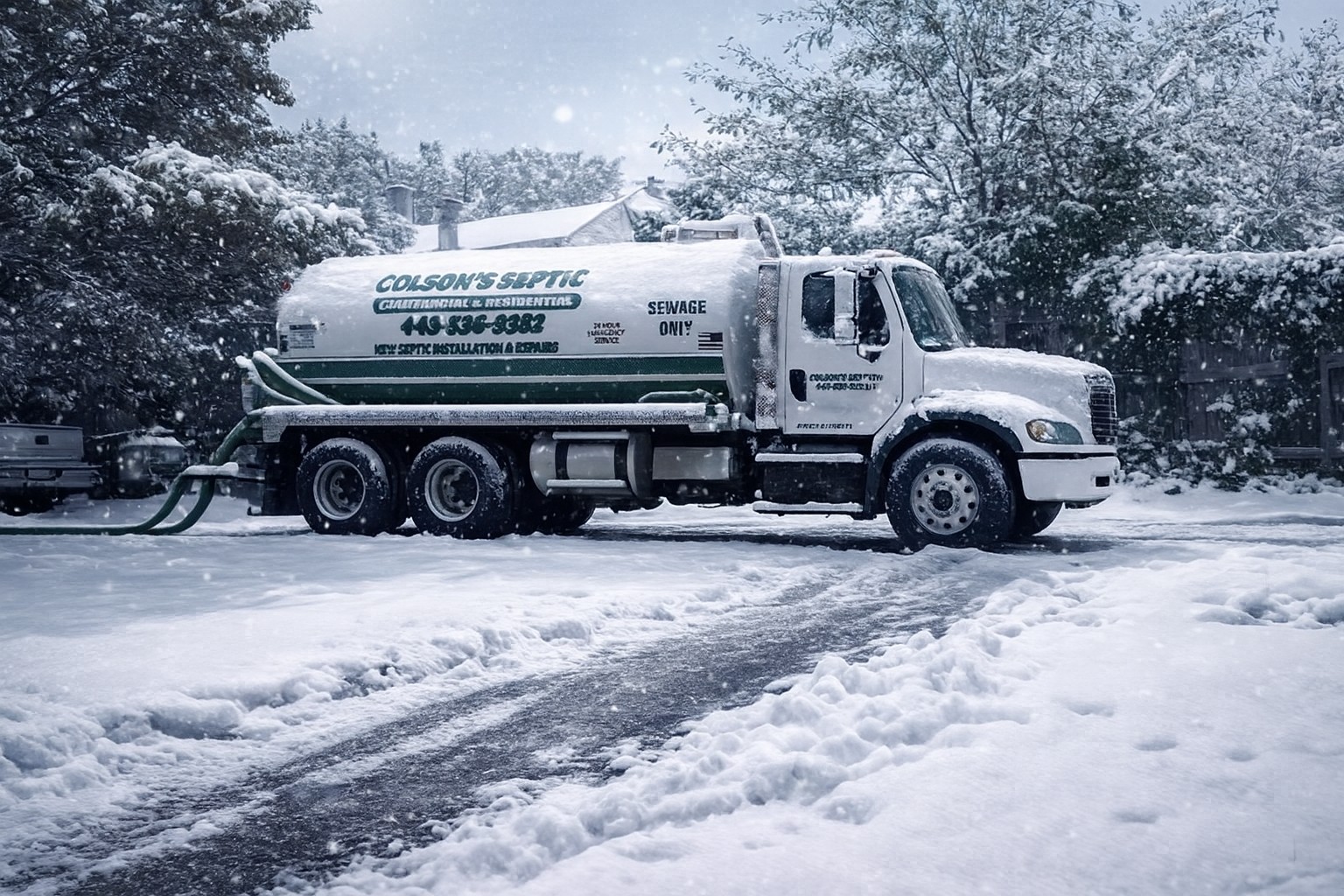
How Maryland’s Weather Affects Septic Line Performance
Maryland’s varied climate — from humid summers to icy winters — influences much more than whether you need a raincoat or snow shovel. For homeowners relying on a septic system, weather can significantly affect how your septic lines and drain field perform. At Colson’s Septic Services, we’ve seen first-hand how the swings in temperature, rainfall, and soil moisture can pressure septic systems. Here’s what Maryland homeowners should know — and how to protect their systems year-round.
🌧️ Rain & Storm Seasons: When Wet Soil = Stress
Maryland generally receives between 40 and 46 inches of precipitation annually, with consistent rainfall throughout the year — and heavier downpours during spring and summer.
- Flooded or saturated drain fields: After heavy rain or storms, the soil in your drain field can become waterlogged. Septic systems depend on the soil to absorb and filter effluent (wastewater). When that soil is already saturated by rain, there’s nowhere for the wastewater to go. This can lead to slow drains, pooling water or soggy spots on your lawn, and in severe cases — backups into your home.
- Potential groundwater contamination: If wastewater can’t be properly absorbed or treated because the soil is saturated, untreated sewage can surface or migrate — a serious concern for both home health and the environment.
- Storm-related damage risks: Intense storms (common along Maryland’s coast and Chesapeake Bay region) or flooding may also erode soil around septic lines or disturb drain field soil, possibly exposing pipes or compromising system integrity.
What homeowners should do: Make sure downspouts, gutters, and surface water runoff are directed away from the drain field. Avoid driving or parking vehicles over the drain field during wet periods. And if you notice soggy spots or slow drains after rain, contact a septic professional — such as Colson’s Septic Services — for an inspection.
❄️ Cold Seasons: When Freezing Means Trouble
Maryland winters bring fluctuations that can spell problems: freezing nights, sleet or snow, and occasional ice storms — especially in higher elevations or during a coastal nor’easter.
- Frozen pipes and septic lines: If the pipes connecting your home to the septic tank or drain field are shallow or not properly insulated, freezing temperatures can cause them to ice over or even crack. That interrupts wastewater flow, leading to blockages and backups.
- Reduced bacterial activity: The beneficial bacteria in your septic tank — responsible for breaking down waste — slow down under cold conditions. This slowdown can lead to sludge buildup, reduced treatment efficiency, and potential overflows or backups.
- Frozen drain field and back-ups: When ground freezes or becomes compacted under snow or ice, the drain field can’t absorb wastewater properly. Snow compaction or traffic over the area (like driving over it) makes freeze deeper and insulation worse.
What homeowners should do: Insulate any exposed pipes or system components, especially those above ground or in unheated basements. During cold snaps, avoid heavy water use — spread out laundry, showers, and dishwashing. And keep vehicles or heavy equipment off the drain field. If possible, allow some warm water to flow periodically to help keep lines from freezing — and schedule a professional check before deep cold sets in.
☀️ Dry Spells & Hot Summers: The “Other” Hidden Stress
While Maryland tends to have enough annual rainfall, drier-than-usual summers — or prolonged periods without rain — can also stress septic systems. Soil that dries out may settle or shrink, potentially shifting septic lines or reducing the permeability of the drain field soil.
Moreover, in very dry, hot summers, moisture levels in the soil around the drain field can drop, limiting how well the soil can absorb effluent — although this is generally less of an issue compared to heavy rain or deep freeze.
What homeowners should do: Keep lawn areas above the drain field vegetated but with shallow-rooted plants (which help maintain soil moisture without disturbing pipes). Avoid covering the drain field with driveways, patios, or heavy concrete, which can inhibit proper evaporation and soil absorption. Monitor your system for slow drainage or odors, especially after a hot, dry summer.
🛠️ Why Regular Maintenance Is Key
At Colson’s Septic Services, we preach — and practice — regular maintenance for a reason. Weather alone can place significant stress on septic systems in Maryland. Combine that with normal household use, and a system can be pushed beyond its limits.
We advise homeowners to:
- Schedule periodic inspections and pumping, even if there are no obvious problems. Regular pumping removes built-up solids — reducing the risk of backups when weather stresses the system.
- Ensure their system — especially pipes and drain fields — is appropriately insulated before winter.
- Monitor landscaping and drainage near the drain field to avoid water pooling or heavy compaction.
- Watch for signs of trouble: soggy ground, slow drains after rain, odd odors, or backs-ups during cold snaps.
✅ Final Thoughts from Colson’s
Maryland’s climate — with its mix of humidity, rainfall, freezing winters, and occasional drought — challenges septic systems in a variety of ways. Whether it’s a summer thunderstorm that saturates your drain field, a cold winter freeze threatening your pipes, or a dry spell shrinking your soil — your septic system’s performance can suffer if you’re unprepared.
At Colson’s Septic Services, we believe a little foresight — combined with regular maintenance — can save homeowners a lot of trouble. If you’re unsure how your system will fare this winter (or after the next big storm), visit our website or give us a call at 443-536-9382. We’ll help make sure your septic lines, tank, and drain field are ready to weather whatever Maryland brings — so you can stay comfortable, safe, and worry-free.