

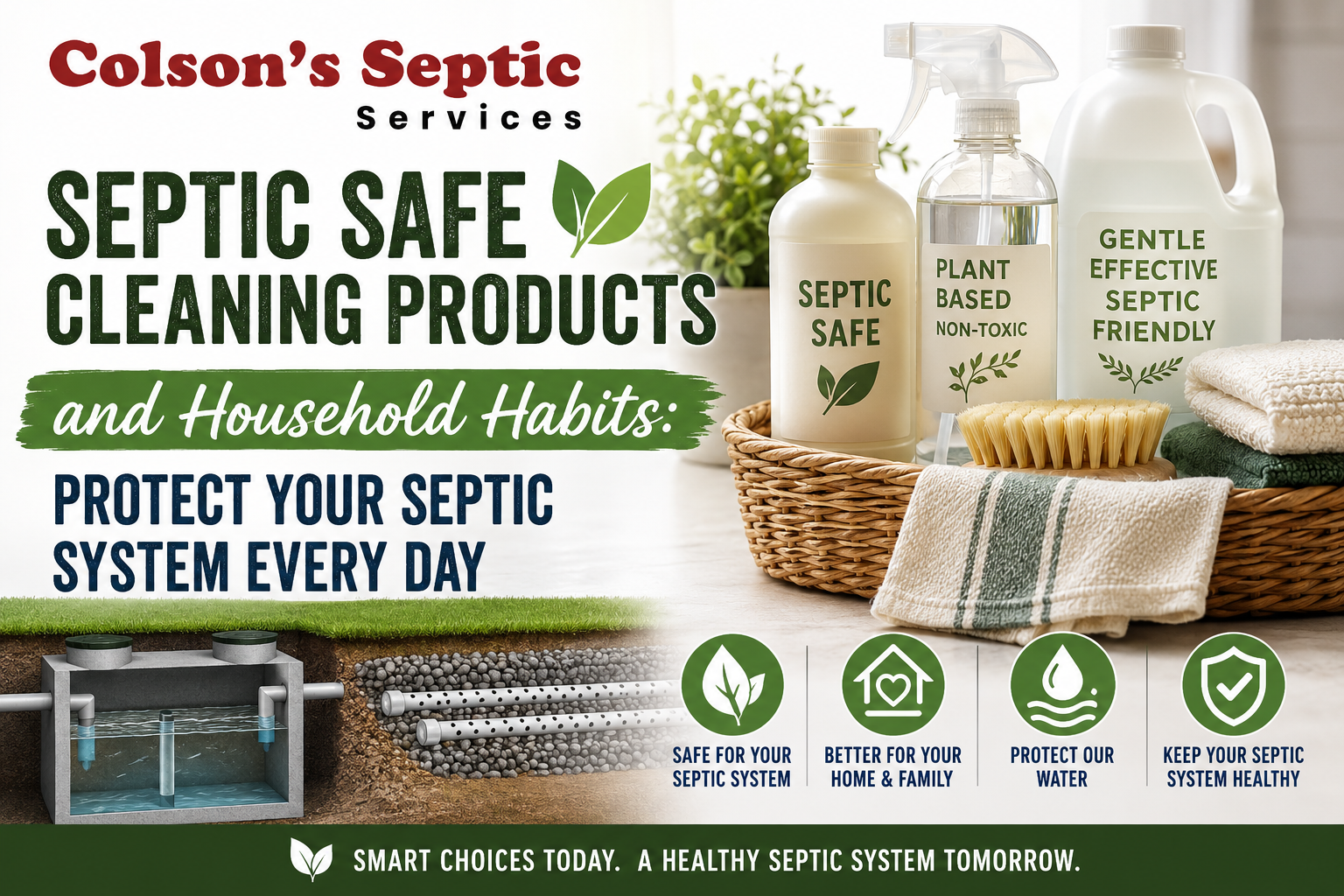
Septic Safe Cleaning Products and Household Habits: Protect Your Septic System Every Day
If your home relies on a septic system, what goes down your drains matters. Your septic tank depends on naturally occurring bacteria to break down waste efficiently. Harsh chemicals, excessive water use, and poor household habits can disrupt this delicate balance, leading to clogs, backups, expensive repairs, or even drain field failure.
At Colson’s Septic Services, we’ve spent more than 30 years helping homeowners throughout Carroll, Frederick, Howard, Baltimore, and Montgomery counties keep their septic systems working properly. One of the easiest ways to extend the life of your septic system is by making smart choices about the products you use every day.
What Makes a Cleaning Product Septic Safe?
A septic-safe cleaner is generally one that is:
- Biodegradable
- Low in phosphorus or phosphate-free
- Free of harsh antibacterial chemicals
- Used in moderation
Remember, even products labeled “natural” or “green” should still be used according to the manufacturer’s directions. Too much of any cleaner can affect your septic system over time.
Septic-Safe Cleaning Products
Here are some products and ingredients that are generally considered septic-friendly when used as directed:
White Vinegar
A natural cleaner that works well for:
- Glass
- Countertops
- Coffee makers
- Mineral buildup
- Bathroom fixtures
Baking Soda
Excellent for:
- Deodorizing carpets
- Scrubbing sinks
- Cleaning tubs
- Freshening drains (without harsh chemicals)
Mild Dish Soap
Choose biodegradable liquid dish soaps without antibacterial additives or excessive bleach.
Liquid Laundry Detergent
Liquid detergents typically dissolve more completely than powdered varieties and leave less residue in septic systems. Look for biodegradable, phosphate-free formulas.
Plant-Based All-Purpose Cleaners
Many plant-based household cleaners are formulated to break down naturally and are gentler on your septic system than heavy chemical cleaners.
Products to Use Sparingly or Avoid
Some common household products can interfere with the beneficial bacteria inside your septic tank.
Heavy Bleach Use
Occasional use for disinfecting is generally not a problem, but repeatedly pouring large amounts of bleach down the drain can reduce beneficial bacteria populations.
Antibacterial Cleaners
Products containing antibacterial ingredients or quaternary ammonium compounds are designed to kill bacteria—which includes the bacteria your septic system needs.
Chemical Drain Openers
Avoid harsh drain cleaners whenever possible. These products can damage your plumbing and disrupt your septic tank’s natural biological processes. Instead, try mechanical drain cleaning or contact a professional if a clog persists.
Solvents, Paints, and Chemicals
Never pour:
- Paint thinner
- Motor oil
- Gasoline
- Pesticides
- Strong solvents
down household drains. These materials don’t belong in a septic system and can contaminate groundwater.
Septic-Friendly Household Habits
The products you buy are only part of the equation. Daily habits make an equally important difference.
Only Flush the Basics
Your toilet should only receive:
- Human waste
- Toilet paper
Never flush:
- “Flushable” wipes
- Baby wipes
- Feminine hygiene products
- Paper towels
- Cotton balls
- Dental floss
- Cat litter
These items do not break down properly and can clog both your plumbing and septic tank.
Spread Out Laundry Loads
Running multiple loads of laundry back-to-back sends a large volume of water into your septic system all at once. Instead, spread loads throughout the week to reduce stress on the tank and drain field.
Fix Plumbing Leaks
A constantly running toilet or dripping faucet may seem minor, but it can send hundreds of unnecessary gallons into your septic system every week.
Limit Garbage Disposal Use
Food waste adds extra solids to your septic tank, causing it to fill more quickly. Compost food scraps when possible, instead of sending them down the disposal.
Protect the Drain Field
Avoid:
- Parking vehicles on your drain field
- Planting trees nearby
- Building sheds, patios, or pools over the system
Keeping the drain field unobstructed allows wastewater to filter properly.
Routine Maintenance Still Matters
Even with the best cleaning products and habits, every septic system requires regular professional maintenance. Routine inspections and septic pumping remove accumulated sludge before it causes expensive problems.
Warning signs that your system may need service include:
- Slow drains
- Gurgling pipes
- Sewage odors
- Wet spots near the drain field
- Backups inside your home
If you notice any of these symptoms, don’t wait for the problem to worsen.
Contact Colson’s Septic Services
Using septic-safe cleaning products and practicing smart household habits can significantly extend the life of your septic system and help you avoid costly repairs. Small daily choices make a big difference over time.
Whether you need routine septic pumping, inspections, repairs, or expert advice, Colson’s Septic Services is here to help. Our experienced team proudly serves homeowners throughout Central Maryland with dependable, professional septic services designed to keep your system running efficiently for years to come. Contact Colson’s Septic Services today to schedule your next septic service and keep your system healthy year-round.