

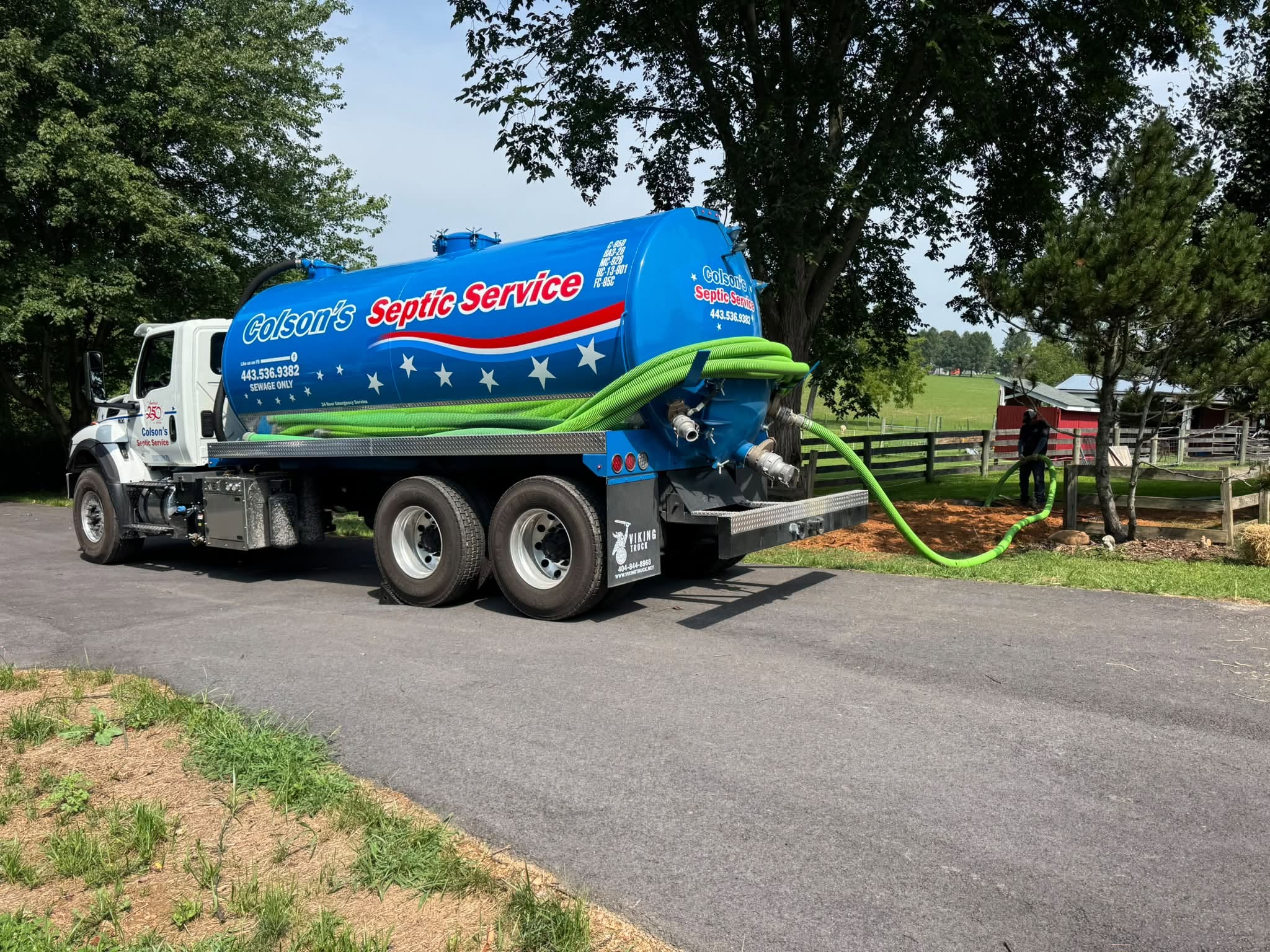
24-Hour Emergency Septic Service in Carroll County, MD
Septic problems rarely happen at a convenient time. A toilet may suddenly back up late at night, sewage odors may appear over the weekend, or you may discover standing water around your septic system when you least expect it. When a serious septic problem occurs, waiting until the next business day may not be an option.
That’s why having access to 24-hour emergency septic service in Carroll County, MD can make such a difference. At Colson’s Septic Services, we understand that septic emergencies can happen at any hour. When your system shows signs of a serious problem, getting professional help quickly can protect your home, property, and septic system from further damage.
What Is Considered a Septic Emergency?
Not every septic issue requires immediate service, but certain warning signs should never be ignored. Septic problems can worsen quickly, particularly when wastewater can no longer move properly through the system.
Some common signs of a septic emergency include:
- Sewage backing up into toilets, sinks, tubs, or showers
- Toilets that will not flush or repeatedly overflow
- Multiple slow drains throughout the home
- Strong sewage odors inside or outside the house
- Standing or unusually wet areas near the septic tank or drain field
- Gurgling sounds coming from toilets or drains
- Wastewater surfacing in the yard
- A septic alarm that suddenly activates
- An overflowing or excessively full septic tank
If you notice sewage backing up into your home or wastewater surfacing outside, avoid using additional water until the problem can be evaluated. Running the dishwasher, washing clothes, taking showers, or repeatedly flushing toilets can send even more wastewater into an already overwhelmed system.
Why Fast Septic Service Matters
A septic backup is more than an inconvenience. Wastewater can damage flooring, drywall, furniture, landscaping, and other areas of your property. It can also create unsanitary conditions that should be addressed as quickly as possible.
Responding promptly may also prevent a smaller septic problem from becoming a much larger repair.
For example, a clogged septic line may initially cause slow drains or gurgling plumbing. Continuing to use large amounts of water could contribute to a complete backup. Similarly, an overdue septic tank may become so full that wastewater can no longer move through the system properly.
The sooner the source of the problem is identified, the sooner the appropriate solution can be determined.
What Can Cause a Septic Emergency?
There are many reasons a septic system may suddenly stop working correctly.
An Overfilled Septic Tank
Septic tanks gradually accumulate solids and need to be pumped periodically. If too much sludge builds up, the system may struggle to handle incoming wastewater and eventually back up.
Clogged Septic Lines
Grease, wipes, paper products, hygiene products, food waste, roots, and other materials can contribute to blockages in septic or plumbing lines.
Damaged or Collapsed Pipes
Older pipes can deteriorate, shift, crack, or collapse. Tree roots and heavy equipment traveling over underground septic components can also cause damage.
Drain Field Problems
The drain field is responsible for dispersing treated wastewater into the soil. When the drain field becomes saturated, clogged, damaged, or overloaded, wastewater may begin appearing on the surface or backing up toward the home.
Heavy Water Usage
Large gatherings, multiple loads of laundry, leaking fixtures, or unusually high household water use can overwhelm some septic systems.
Severe weather and saturated ground conditions can also make existing septic problems more noticeable.
What Should You Do During a Septic Emergency?
If you suspect a serious septic problem, one of the most important things you can do is reduce water use immediately.
Avoid running appliances that use large amounts of water, including washing machines and dishwashers. Keep showers and flushing to an absolute minimum until the system has been evaluated.
You should also keep children and pets away from any standing wastewater outside. Avoid attempting to open or enter a septic tank yourself. Septic tanks contain dangerous gases and should only be accessed by trained professionals with the proper equipment.
Then, contact an experienced septic service provider and explain exactly what you are experiencing. Helpful information may include when the problem started, whether multiple drains are affected, when the tank was last pumped, and whether you see standing water near the septic system.
Emergency Septic Pumping May Be Part of the Solution
For some emergencies, septic pumping can help relieve an overloaded tank and allow a technician to better evaluate the system.
However, pumping alone does not solve every septic problem.
If the underlying issue is a damaged line, blockage, broken baffle, distribution problem, or failing drain field, additional repairs may be necessary. A professional evaluation helps determine the actual cause instead of simply treating the symptoms.
That is especially important if you have experienced repeated backups. A septic system that continually develops the same problem may need more than routine pumping.
Preventing Your Next Septic Emergency
While not every emergency can be prevented, proper septic maintenance can significantly reduce your chances of dealing with an unexpected backup.
Homeowners should:
- Schedule regular septic pumping based on household and system needs.
- Avoid flushing wipes, feminine hygiene products, paper towels, and other non-septic-safe materials.
- Keep grease, cooking oils, and excessive food waste out of drains.
- Repair leaking toilets and faucets.
- Spread laundry loads throughout the week instead of doing many loads at once.
- Keep vehicles and heavy equipment off the septic tank and drain field.
- Pay attention to slow drains, odors, and other early warning signs.
A small issue is usually easier to address before it becomes a late-night septic emergency.
24-Hour Emergency Septic Service in Carroll County
Whether you live in Westminster, Eldersburg, Sykesville, Hampstead, Taneytown, Manchester, New Windsor, Union Bridge, or elsewhere in Carroll County, septic problems can happen without warning.
When they do, Colson’s Septic Services is ready to help.
If you are experiencing a septic backup, overflowing tank, sewage odors, slow drains, standing wastewater, or another urgent septic problem, don’t ignore the warning signs. Quick professional attention can help limit property damage, identify the cause of the problem, and get your septic system working properly again.
Contact Colson’s Septic Services for 24-hour emergency septic service in Carroll County, MD. When a septic problem can’t wait until morning, you need an experienced local septic company you can call when you need help most.