

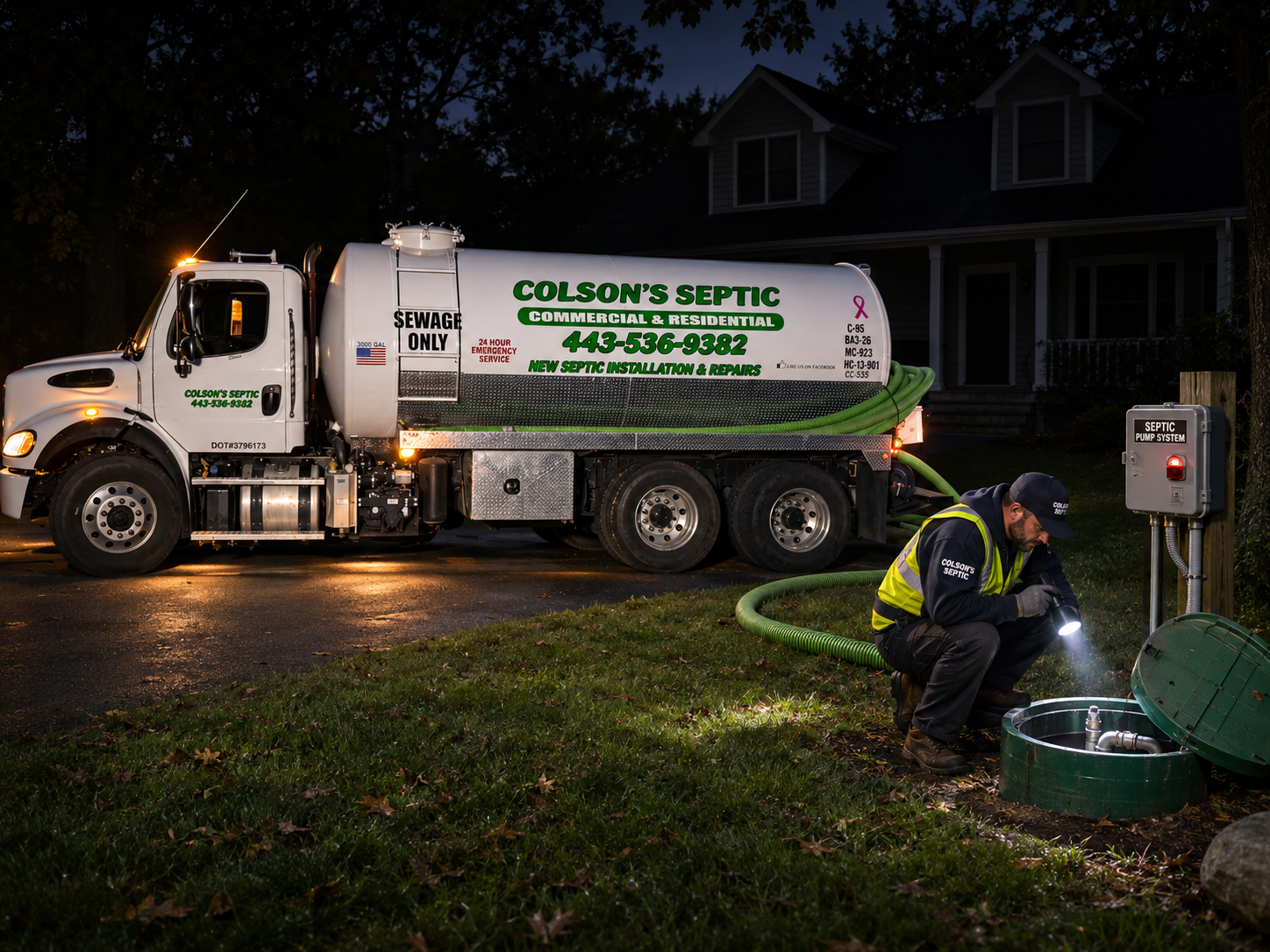
Septic Problems After a Power Outage: What Homeowners Should Check
Power outages are an inconvenience for any homeowner, especially when severe thunderstorms, heavy winds, snow, or ice knock out electricity for hours or even days. While most people focus on keeping their refrigerators running and restoring their heating or cooling systems, one important household system often gets overlooked: the septic system.
Many homeowners don’t realize that certain septic systems rely on electricity to function properly. When the power goes out, septic pumps, alarms, and other electrical components may stop working, potentially leading to wastewater backups, unpleasant odors, and expensive repairs.
At Colson’s Septic Services, we want Maryland homeowners to understand how power outages can affect their septic systems and what to check once electricity has been restored.
How Does a Power Outage Affect Your Septic System?
Not every septic system is affected by a loss of electricity. Traditional gravity-fed systems typically allow wastewater to flow from the home into the septic tank and drain field without requiring electrical power.
However, some systems rely on electric pumps to move wastewater between tanks or to a drain field. Other systems use electrical components for wastewater treatment, monitoring, or alarms.
When these components lose power, wastewater may accumulate in the system rather than being pumped or treated as designed.
If household water usage continues during an extended outage, the system can become overloaded, increasing the risk of sewage backups and other septic problems.
Understanding what type of septic system you have is the first step toward preventing problems during an electrical outage.
- Check Your Septic Alarm
If your septic system has an electric pump, it may also have a high-water alarm that alerts you when wastewater levels become too high.
After electricity is restored, check the alarm panel for warning lights or audible alerts.
An alarm may indicate that:
- Wastewater accumulated during the power outage.
- The septic pump has not resumed normal operation.
- The pump chamber contains more wastewater than usual.
- An electrical or mechanical component requires attention.
In some systems, an alarm may activate temporarily while the system recovers from the outage.
Important: Do not ignore an alarm that remains active. Follow your system manufacturer’s instructions, reduce water usage, and contact a septic professional if you are unsure whether the system is functioning correctly.
- Look for Slow Drains or Sewage Backups
One of the most noticeable signs of septic trouble after a power outage is slow-draining plumbing.
Pay attention to sinks, showers, bathtubs, and toilets throughout your home.
Warning signs include:
- Toilets that flush slowly or struggle to drain.
- Gurgling noises coming from plumbing fixtures.
- Water backing up into basement drains.
- Wastewater appearing in showers or bathtubs.
- Unpleasant sewage odors inside your home.
These symptoms may indicate that wastewater is not moving through your septic system properly.
If sewage begins backing up into your home, stop using water immediately and contact a professional septic service provider.
Continuing to run water can worsen the situation and increase the risk of property damage.
- Inspect the Area Around Your Septic Tank and Drain Field
After a major storm or power outage, take a few minutes to visually inspect the outdoor areas surrounding your septic tank and drain field.
Look for unusually wet ground, standing water, or sewage odors.
Other potential warning signs include unusually lush patches of grass, erosion near septic components, or visible damage to exposed pipes and access covers.
Keep in mind that heavy rainfall can saturate the soil around your drain field, making it difficult for treated wastewater to disperse properly.
Never open a septic tank or attempt to inspect its interior yourself. Septic tanks contain hazardous gases and present serious safety risks. Outdoor inspections should be limited to observing conditions from a safe distance.
If you notice sewage surfacing or damaged equipment, keep children and pets away from the affected area and contact a septic professional.
- Check for Pump or Electrical Problems
If your septic system uses an electric pump, restoring power to your home does not always mean the pump has returned to normal operation.
Electrical surges, tripped breakers, damaged wiring, or mechanical problems can interfere with the pump’s performance.
If it is safe to do so, homeowners can check their home’s electrical panel for an obviously tripped septic-system breaker.
However, avoid repeatedly resetting a breaker that continues to trip.
Never handle damaged wiring, submerged electrical components, or exposed septic equipment.
Pump controls and timers may also require special attention after an extended outage. Some systems must gradually process wastewater that accumulated while the electricity was off.
A qualified septic technician can inspect the pump, electrical controls, and alarm system to determine whether everything is operating correctly.
- Reduce Water Usage After Power Is Restored
Even after your electricity returns, your septic system may need additional time to recover.
If your system relies on a pump, wastewater may have accumulated in the pump chamber during the outage.
Immediately returning to normal household water usage could place unnecessary stress on the system.
To help prevent overloading:
- Avoid running multiple loads of laundry.
- Space out showers and other water-intensive activities.
- Run the dishwasher only when necessary.
- Repair leaking toilets and faucets.
- Avoid unnecessary flushing.
- Continue conserving water until the system is operating normally.
Depending on your system’s design and the length of the outage, you may need to limit water usage for a day or longer.
For systems with timed pumps, follow the manufacturer’s instructions or guidance from your septic professional before resuming regular water usage.
- Watch for Problems Caused by Severe Weather
In Maryland, power outages frequently accompany storms that bring heavy rainfall, flooding, high winds, or winter weather.
These conditions can create additional challenges for septic systems.
Heavy rain can saturate a drain field, reducing its ability to absorb wastewater. Floodwater may also damage electrical components or enter improperly sealed septic equipment.
Fallen trees, shifting soil, and storm debris can potentially damage underground pipes or exposed system components.
Following severe weather, check for visible changes around your septic system and avoid driving heavy equipment over the septic tank or drain field.
If your property experienced significant flooding, have the system evaluated before attempting electrical repairs or resuming normal operation.
- Know When to Call a Septic Professional
Some septic problems after a power outage are temporary, but others require professional attention.
Homeowners should schedule a septic inspection if they notice persistent alarms, recurring plumbing backups, unusual odors, wet areas around the drain field, or signs that the septic pump is not operating correctly.
A professional inspection can help determine whether the issue involves electrical equipment, clogged lines, pump failure, or another septic system component.
Addressing problems early can help prevent more extensive repairs and protect your home from wastewater damage.
Preventing Septic Problems During Future Power Outages
Although power outages cannot always be prevented, proactive septic maintenance can reduce the likelihood of major problems.
Homeowners should understand whether their septic system requires electricity, know where the alarm panel is located, and maintain records of previous inspections and repairs.
Regular septic tank pumping is also important. Most residential systems require pumping approximately every three to five years, although the appropriate schedule depends on household size, water usage, tank capacity, and other factors.
For homes with pump-dependent septic systems, a properly installed backup power solution may be worth considering. Always consult qualified professionals to determine whether a generator or backup system is compatible with your equipment.
Routine inspections can also identify aging pumps, damaged components, and other potential problems before an emergency occurs.
Trust Colson’s Septic Services for Septic Repairs in Maryland
A power outage may seem like a minor inconvenience, but for homeowners with electrically powered septic systems, it can lead to serious plumbing and wastewater problems.
Checking your septic alarm, monitoring household drains, inspecting the surrounding property, and conserving water can help you identify potential issues before they become costly emergencies.
At Colson’s Septic Services, we have more than 30 years of industry experience helping Maryland homeowners maintain and repair their septic systems. Our team provides professional septic pumping, septic repairs, inspections, and emergency services throughout Carroll County and surrounding communities.
Whether you’re experiencing a sewage backup, dealing with a malfunctioning septic pump, or simply want peace of mind after a prolonged power outage, we’re here to help.
Don’t wait for a small septic issue to become a major problem.
Contact Colson’s Septic Services today for reliable septic service in Westminster, Sykesville, Eldersburg, Hampstead, and throughout Carroll, Frederick, Howard, Baltimore, and Montgomery counties.
Call 443-536-9382 or visit www.colsonsseptic.com to schedule service.
Colson’s Septic Services — Keeping Maryland Septic Systems Running Smoothly, Even After the Storm.