

Preparing Your Septic System for Winter:
Essential Tips to Prevent Freezing and Costly Repairs
As winter approaches in Maryland, homeowners begin preparing their properties for freezing temperatures, snow, and ice. While many people focus on protecting outdoor faucets, insulating their homes, and maintaining heating systems, one important part of winter preparation is often overlooked: the septic system.
Cold weather can create serious challenges for septic systems, particularly when temperatures remain below freezing for extended periods. Frozen pipes, blocked wastewater lines, and damaged system components can lead to expensive repairs and unexpected plumbing emergencies.
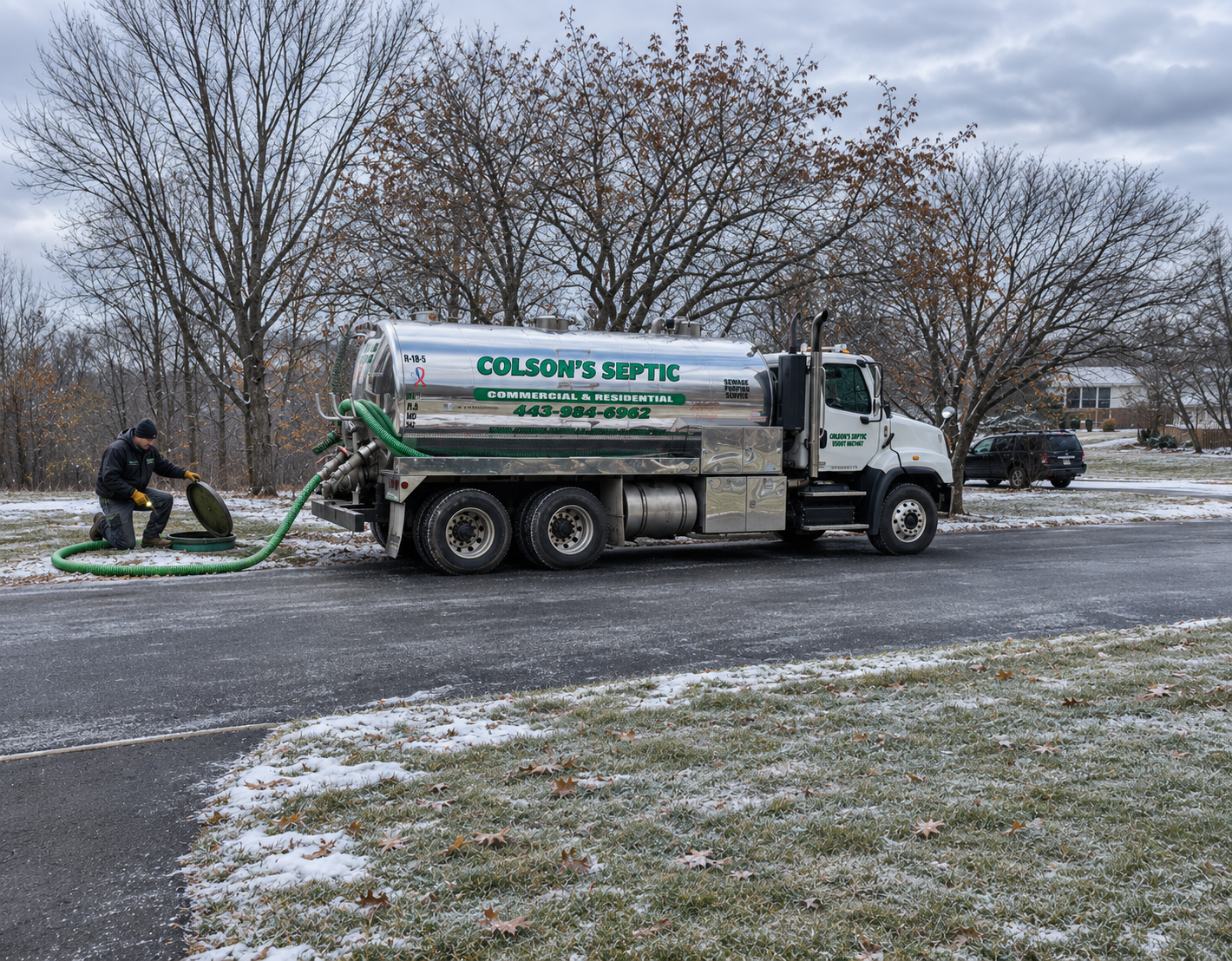
At Colson’s Septic Services, we understand the importance of keeping your septic system operating efficiently year-round. Whether you live in Carroll County, Frederick County, or surrounding Maryland communities, taking a few preventative steps before winter arrives can help protect your septic system and avoid unnecessary headaches.
- Insulate Exposed Pipes and Septic System Components
One of the most important steps in preparing your septic system for winter is ensuring that vulnerable pipes and components are adequately insulated.
Although most septic tanks and underground pipes are buried beneath the frost line or protected by surrounding soil, shallow pipes and exposed components can become susceptible to freezing during prolonged cold spells.
To reduce the risk of frozen septic pipes:
- Inspect exposed plumbing and vulnerable pipe connections for inadequate insulation.
- Use appropriate pipe insulation on exposed sections where freezing may occur.
- Consider adding a layer of straw or mulch over areas with shallow septic lines, following professional recommendations.
- Check septic tank risers and access covers to ensure they are properly sealed and protected.
For systems with a history of freezing, additional insulation may be necessary. In some situations, a layer of loose organic material can help retain warmth in the soil and protect underground components.
If you’re unsure which areas of your septic system need extra protection, a septic professional can help identify potential trouble spots before temperatures drop.
- Manage Snow Around Your Septic Tank and Drain Field
Snow might seem like a threat to your septic system, but a natural layer of snow can actually provide insulation against freezing temperatures.
However, how you manage snow around your septic tank and drain field can make a significant difference.
Avoid removing natural snow cover. Undisturbed snow acts as an insulating blanket, helping protect the soil and underground septic components from extreme cold.
Keep heavy equipment off your drain field. Driving vehicles, snowplows, or other machinery over the septic area can compact snow and soil, reducing insulation and potentially damaging underground pipes.
Avoid piling plowed snow over the septic system. Large snow piles can create unnecessary weight, compact the insulating snow beneath them, and contribute to drainage problems during melting.
Direct melting snow away from the system. As temperatures rise, make sure runoff does not collect around septic tank openings or saturate the drain field.
Proper snow management can help maintain consistent underground temperatures while protecting your septic system’s structural integrity.
- Schedule Septic Tank Pumping Before Freezing Temperatures Arrive
Routine septic tank pumping is essential for maintaining a healthy system, regardless of the season.
Over time, solid waste accumulates inside your septic tank. If left unchecked, excessive buildup can interfere with wastewater treatment and increase the risk of backups.
Winter conditions can make septic maintenance more challenging because frozen ground and snow may limit access to buried tank lids.
Scheduling septic pumping during the fall provides several advantages:
- Easier access to the septic tank before snow and frozen ground become obstacles.
- An opportunity to identify maintenance concerns before winter.
- Reduced risk of problems caused by accumulated sludge and solids.
- Greater peace of mind during the colder months.
However, septic tanks should be pumped according to their maintenance needs, not simply emptied to prevent freezing. Routine residential pumping is commonly recommended every three to five years, depending on tank size, household use, and system conditions.
If your septic tank is approaching its recommended pumping interval, fall is an excellent time to schedule service with Colson’s Septic Services.
- Repair Leaking Faucets and Plumbing Fixtures
Even a small plumbing leak can become a significant problem during freezing weather.
Dripping faucets, leaking toilets, and other plumbing issues allow small amounts of water to enter septic pipes. During extremely cold temperatures, that slow-moving water may freeze inside vulnerable lines, gradually creating an obstruction.
Before winter begins, inspect your home’s plumbing for leaks and repair any problems promptly.
Pay particular attention to running toilets, dripping fixtures, and exposed pipes in unheated areas.
Fixing leaks also reduces unnecessary water entering your septic tank, helping maintain efficient wastewater treatment.
- Maintain Consistent Water Usage Throughout Winter
Your septic system benefits from normal, consistent household water usage. Regular wastewater flow introduces relatively warm water into the system, which can help reduce freezing risks.
However, excessive water usage can overwhelm the septic tank and drain field.
Rather than doing several loads of laundry in one day, spread them throughout the week. Avoid running multiple water-intensive appliances simultaneously whenever possible.
If you plan to leave your home vacant for an extended period during winter, consider consulting a septic professional about appropriate winterization procedures.
Seasonal properties and vacation homes may require additional precautions because long periods without wastewater flow can increase the likelihood of freezing.
Never leave faucets running continuously as a freezing-prevention strategy. This wastes water and can overload the septic system.
- Protect Your Drain Field from Winter Damage
Your septic drain field plays a critical role in filtering and dispersing treated wastewater into the surrounding soil.
During winter, frozen or compacted soil can affect how efficiently wastewater moves through the ground.
To protect your drain field:
- Avoid parking cars, trucks, trailers, or recreational vehicles over the area.
- Keep snowmobiles and heavy equipment away from septic components.
- Maintain healthy grass coverage to help protect the soil.
- Prevent excessive runoff from collecting over the drain field.
- Avoid installing structures or storing heavy materials on top of the system.
A properly maintained drain field is essential to the overall health and longevity of your septic system.
- Know the Warning Signs of a Frozen Septic System
Despite your best preventative efforts, freezing issues can occasionally occur.
Recognizing the early warning signs can help prevent a minor problem from becoming a costly emergency.
Common signs of septic trouble during winter include:
- Slow-draining sinks, showers, or bathtubs.
- Gurgling sounds coming from household plumbing.
- Sewage odors inside or outside your home.
- Wastewater backing up into toilets, sinks, or basement drains.
- Standing water or unusual wet spots near septic components.
These symptoms do not always indicate freezing. They may also be caused by blockages, an overloaded septic tank, or drain field problems.
If you suspect your septic system has frozen, avoid attempting to thaw underground pipes with open flames, boiling water, or harsh chemicals. Do not pump a frozen septic tank without professional guidance.
Instead, contact a qualified septic service provider to diagnose the problem and recommend the appropriate solution.
- Schedule a Professional Septic Inspection Before Winter
One of the most effective ways to prepare your septic system for winter is to address potential maintenance issues before they become emergencies.
A professional septic evaluation can help identify damaged pipes, deteriorating components, drainage problems, and other concerns that may worsen during freezing weather.
At Colson’s Septic Services, we provide septic pumping, repairs, septic line cleaning, and other services to help homeowners maintain dependable wastewater systems.
Preventative maintenance can save you from the inconvenience of dealing with septic problems during the coldest months of the year.
Keep Your Septic System Running Smoothly All Winter with Colson’s Septic Services
Winter weather can be unpredictable in Maryland, but preparing your septic system doesn’t have to be complicated.
By insulating vulnerable components, managing snow properly, scheduling routine pumping, repairing plumbing leaks, and protecting your drain field, you can significantly reduce the risk of frozen pipes and other winter-related septic problems.
Colson’s Septic Services proudly serves homeowners and businesses throughout Carroll, Frederick, Howard, Baltimore, and Montgomery counties in Maryland. With more than 30 years of industry experience, our team provides professional septic pumping, repairs, installations, and maintenance services.
Don’t wait until freezing temperatures cause a septic emergency. Take preventative action now to protect your home and septic system throughout the winter season.
Contact Colson’s Septic Services today to schedule your septic maintenance before winter arrives and enjoy peace of mind all season long.